

By Ajaz Rashid
The Great Kashmiri Wedding must be seen in full: as a profound celebration of community and a pressing call for mindful reformation.
The news arrived, as it often does, wrapped in the soft, familiar cadence of a childhood friend’s voice. His daughter is engaged, the wedding set for the winter of 2026.
The initial flush of congratulations gave way to a more complex reflection—a familiar, internal debate between critique and understanding. For in Kashmir, a wedding is never just a wedding. It is the culmination of a lifetime’s striving, the most vivid thread in a complex social tapestry, and, too often, a vortex of exhausting excess.
To judge it harshly is to misunderstand its deep roots; to accept it uncritically is to be complicit in its burdens. The Great Kashmiri Wedding must be seen in full: as a profound celebration of community and a pressing call for mindful reformation.
To understand the scale, one must first understand the scaffold. For generations, Kashmiri parents have structured their entire adult lives around three sacred pillars: constructing a home, the marriages of their children, and undertaking the Hajj pilgrimage. These are not mere goals; they are the trilogy of a life well-lived, a testament to faith, family, and social continuity.
The house is a physical anchor for the lineage. The Hajj is the ultimate spiritual cleansing. And the wedding? The wedding is the living, breathing, public fulfilment of the first two. It is where the built home is filled with celebration, and where a family’s social faith is enacted. Every rupee saved, every sacrifice made over decades, is, in the parents’ eyes, directed toward this moment.
It is their sawab (blessing), their legacy, their final, grand act of provisioning before passing the mantle. To dismiss their desire for a grand celebration is to dismiss the very architecture of their life’s purpose.
This explains the expansive guest list, often mistaken for mere show. In our culture, an invitation is not a transaction; it is an acknowledgment of a thread in the tapestry. That distant cousin, your father’s old colleague, the neighbour from two lanes over—their presence is a stitch in the fabric of a family’s history.
A wedding is a rare, sanctioned occasion to re-weave the entire social net, to honour connections that daily life obscures. The personal visit to deliver an invitation is a ritual of respect, a tangible reaffirmation of the bond. This gathering is not a party; it is a living map of a family’s place in the world. The laughter in the kitchen, the shared memories over nun chai or kehwa, the elders blessing the young—these moments reinforce a collective identity that individualism cannot provide. The wedding is a societal glue, and every guest is a vital ingredient.
Yet, this beautiful, communal intent is where the distortion often begins. The noble desire to honour community mutates, under social pressure, into a “galore of functions” that can border on the performative. The trousseau becomes a public exhibition of wealth rather than a private preparation for a new home. The pre and post wedding functions stretch into a week-long marathon where the same faces eat nearly identical food night after night.
Herein lies the the tyranny of repetition. This is not celebration; it is culinary and social fatigue. The sheer volume of rich, red-meat dishes over consecutive days becomes a health concern, a far cry from the tradition’s original intent of celebratory, occasional feasting.
The wazwan itself, transforms from a feast into a scorecard. The move from 7 dishes to 20, then 30, is a race where quality is sacrificed for quantitative boasting. Mountains of leftover food, a testament to misguided abundance, stand in stark contrast to the values of gratitude and moderation that our culture also holds dear. The financial haemorrhage is staggering—lifetimes of savings evaporate in a spectacle, often funding not the couple’s future, but a fleeting social statement. The couple, the very reason for the event, become exhausted props in their own drama, their preferences drowned out by the deafening chorus of “What will people say?”
So, how do we preserve the soul of the celebration while shedding its burdens? The answer lies not in demolition, but in thoughtful, curation. It is possible to honour the tapestry without setting the loom on fire.
First, Adherence to Time. A wedding that respects its guests begins and ends as announced. The chronic “Kashmiri time” delay for the Baraat (groom’s procession) is not a charming idiosyncrasy; it is disrespect. A disciplined schedule honors everyone’s presence and allows the event to be a pleasure, not an endurance test.
Second, The Intelligent Feast. Let’s champion quality over quantity. A meticulously prepared, limited selection of wazwan dishes is far more respectful of the craft and the palate than an overwhelming sprawl. Why not introduce a “Wazwan Light” lunch for daytime functions—featuring Yakhni, Kababs, and Rista with lighter accompaniments? Furthermore, in an era of fussy eaters, a dedicated children’s and a safe, supervised play area are not modern frivolities. They are acts of inclusion that allow parents to relax and children to create their own joyful memories of the day.
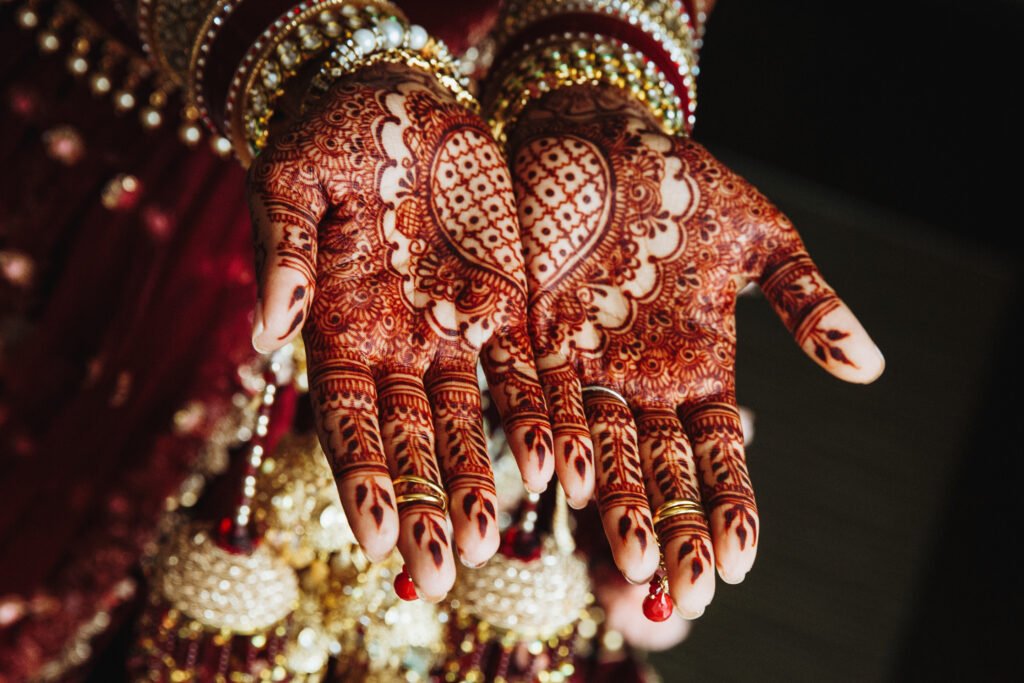
Third, Redefining the Functions. Must every pre-wedding event be a massive dinner? A Mehndi must continue to be an intimate garden brunch for the bride’s friends. A Khabar (traditional bread-sharing) could be a heartfelt, home-bound ceremony with only immediate family, preserving its sanctity. Consolidate. Choose one grand gatherings for the wide community, and let the others be smaller, more meaningful rituals as they always have been supposed.
Finally, Redirect the Resources. The money saved from avoiding identical feasts could be the couple’s down payment on an apartment, a fund for further studies, or seed capital for a dream. This is not a loss of tradition; it is the ultimate act of parental love—investing in the couple’s future stability rather than in one day’s transient applause.
The Great Kashmiri Wedding can be a warm, vibrant, and sustainable celebration. It can honour the parents’ lifetime of sacrifice by spending their hard-earned money wisely and meaningfully. It can honour the community by gathering them in genuine joy, not exhausted obligation. And, above all, it can honour the couple by centering their comfort, their personality, and their future.
Ajaz is a social and development entrepreneur. He can be reached at info@ajazrashid.org
