

Remembering the Two Sardars Who Forged Us in the Valley’s Crucible
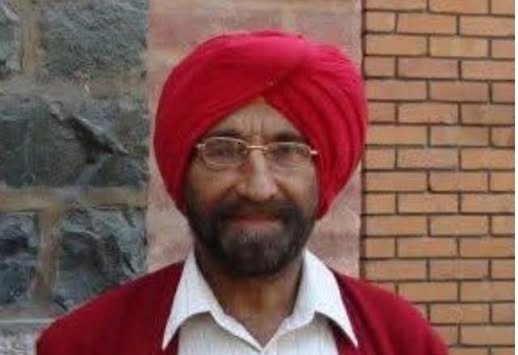

A Personal Tribute to Bali Sir and Mohinder Sir
By Ajaz Rashid
With the recent passing of Bali Sir, following Mohinder Sir’s departure in late 2020, an era has definitively ended—an era when sports teachers were not merely instructors of physical education but sculptors of character, builders of discipline, and architects of the values that would sustain us through life’s most turbulent passages.
I write this tribute as one privileged to have been shaped by both these remarkable men, these two Sardars of the Valley of Kashmir, whose influence extended far beyond the playing fields of Presentation Convent Higher Secondary School and Burn Hall School in Srinagar.
Their story is inseparable from the story of Kashmir itself during those formative years of the 1970s and beyond, when education still carried the weight of moral instruction, when teachers lived among their students, and when the relationship between guru and shishya transcended the transactional nature of modern pedagogy.
THE WORLD OF JOGINDER SINGH BALI
My earliest memories are wrapped in the protective cocoon of Presentation Convent Higher Secondary School, where the figure of Joginder Singh Bali Sir presided over our physical education with a benevolent authority that seemed as permanent as the mountains surrounding Srinagar.
Bali Sir was not merely a teacher at PCHS; he was an integral part of its very architecture, living on campus with his family—two sons and a daughter—right across the far end of the school campus on the other side of the playground.
I can still picture him cycling across that playground, his turban perfectly tied, his posture erect, embodying a dignified simplicity that characterized a generation of educators who saw teaching not as a profession but as a calling. The bicycle was a symbol of a man so comfortable in his role, so secure in his purpose, that ostentation held no appeal.
This was the mid-1970s, a Kashmir still recognizable to those of us who carry its memory like a cherished photograph, slightly faded but indelibly precious. PCHS was a world unto itself, and for boys allowed to study there only until the third primary—it represented a gentle introduction to formal education, presided over by nuns whose kindness was matched only by their exacting standards, and by Bali Sir, whose presence on the playground was as reassuring as it was inspiring.
His son, Dilbagh Singh, was our batchmate, which gave us a peculiar insight into Bali Sir’s life. Unlike many teachers who maintained a careful distance from their students’ personal lives, Bali Sir’s campus residence meant we saw him not just as an authority figure but as a family man, a neighbor, a human being who lived the values he taught.
This proximity bred not familiarity that breeds contempt, but a deeper respect, an understanding that the discipline he demanded on the field was the same discipline that governed his own life.
I believe Bali Sir had served at St. Joseph’s High School before moving to Srinagar and PCHS. Such relocations were common then, as good teachers were sought after and moved between schools, carrying with them their accumulated wisdom and their evolving pedagogical philosophies. Both schools he touched was enriched by his presence, each batch of students shaped by his blend of strictness and care.
He was a physical instructor in the truest sense, instructing not just our bodies but our entire physical presence in the world. Under his watchful eye, we learned to stand straight, to move with purpose, to respect our bodies as instruments of our will. In an age before gyms and fitness centers dotted every neighbourhood, before personal trainers and wellness coaches became commonplace, Bali Sir was teaching us that physical fitness was not vanity but responsibility, not optional but essential.
FROM PROTECTION TO CHALLENGE
The transition from PCHS to Burn Hall School was, for me and for many others, nothing short of traumatic. At PCHS, as a junior primary student, I had been cocooned in an environment where my elder sister carried my bag and lunch box and water bottle to the school bus. Bali Sir’s strictness was tempered by the overall gentleness of the institution.
Burn Hall School was a different universe entirely—an all-boys world order where sentimentality was currency without value and weakness an invitation to be tested. And presiding over this universe, like some Old Testament deity, was the legend, the giant, the force of nature known as Mohinder Sir, though we sometimes called him Mahinder Sir.
My first encounter with Mohinder Sir remains seared in my memory with the clarity of trauma. I was in fourth primary, new to the school, still learning the unwritten codes of this masculine environment. In my anxiety about fitting in, I had forgotten to wear my school tie.
Mohinder Sir spotted the infraction immediately. His eyes, which seemed to possess a supernatural ability to detect the slightest deviation from school uniform regulations, fixed on my neck where the tie should have been. He called me over, his voice carrying across the playground with an authority that made every other conversation stop. He asked the senior boys who were with him—his lieutenants, his enforcers—to hold me and remove my shorts.
I remember those four boys laughing, enjoying the spectacle at the expense of a fragile new student. The humiliation burning through me, the desperate wish that the ground would open and swallow me. And then I remember Mohinder Sir taking over, sparing me the ultimate indignity, but issuing a warning in a voice that left no doubt about the consequences of a second offense: “Come to school in full uniform.”
This incident could have made me hate Mohinder Sir. But here is the paradox of great teachers like Mohinder Sir: their strictness, which seems cruel in the moment, is often the very thing that saves us, that teaches us the boundaries within which freedom becomes possible, that instils the discipline without which talent remains forever potential rather than achievement.
THE REVELATION OF MOHINDER SINGH
Over the following years at Burn Hall School, I came to understand the real Mohinder Singh, the man behind the fearsome reputation, the teacher behind the strict disciplinarian.
He was, I discovered, a beloved figure despite—or perhaps because of—his exacting standards. He was strict, yes, but his strictness was neither arbitrary nor cruel. It was the strictness of someone who cared deeply about what we would become, who refused to let us settle for less than our potential, who understood that adolescent boys require firm boundaries precisely because they are testing every limit.
Mohinder Sir was known throughout BHS for his iconic enforcement of rules, particularly regarding hair length. In an era when longer hair was becoming fashionable among young people globally, he maintained military standards. Hair had to be short, neat, properly groomed. This seems trivial now, perhaps even authoritarian, but it was part of a comprehensive system of discipline that taught us that details matter, that how we present ourselves to the world reflects how we think about ourselves, that self-respect begins with self-care.
He was what we now call a “savvy sportsman,” though that term barely captures the breadth of his athletic knowledge and his ability to nurture talent in others. He could spot ability instantly, could identify which boy had the build for football, which had the temperament for cricket, which possessed the endurance for long-distance running. More importantly, he knew how to develop that raw talent, how to push us beyond what we thought were our limits, how to transform natural ability into disciplined skill.
Under Mohinder Sir, sports at BHS were not recreational activities but serious pursuits. We trained hard, competed fiercely, learned to win with humility and lose with grace. He produced athletes who went on to represent their schools, their universities, their states.
But more than athletes, he produced men who understood the value of physical fitness, who carried into their adult lives the habits of discipline and perseverance he had instilled.
What made Mohinder Sir particularly effective was his imposing presence. He was a giant in stature and personality, a man who commanded attention simply by entering a room. His voice could silence an entire assembly. His disapproval could devastate. But his approval—ah, his approval was worth any effort, any sacrifice. A word of praise from Mohinder Sir could sustain a boy through weeks of doubt, could fuel hours of additional practice, could transform an average student into a champion.
THE FULL CIRCLE: FRIENDSHIP AFTER HIERARCHY
Years passed. The terrified boy in fourth primary became a senior student, one of Mohinder Sir’s trusted prefects, someone who had not just survived but thrived under his demanding regime. After BHS, my connection with Mohinder Sir ended, remain a powerful memory but not a present reality. Life, however, had other plans. After his retirement from BHS, Mohinder Sir shifted to DPS Srinagar, and I encountered him there in one of my professional capacities in the media. The meeting was revelatory.
Gone was the strict disciplinarian of my childhood, or rather, that aspect of him was balanced by other qualities that age and retirement had made more visible. He spoke of his former students, with genuine affection, recounting our achievements, asking about our lives, expressing pride in what we had become. The hierarchy that had defined our earlier relationship dissolved into something more precious: friendship.
This friendship deepened after the devastating floods of 2014, which brought Kashmir to its knees and tested the resilience of its people. I joined a large not-for-profit organization working for relief and rehabilitation in the valley, coordinating resources, identifying needs, trying to bring some order to the chaos of disaster.
Mohinder Sir reached out to me, offering to help identify beneficiaries in his locality of Mehjoor Nagar. I visited him there, in his home, and witnessed once again his fierce and amazing sense of honesty and values. He knew his community intimately, knew who genuinely needed assistance and who was trying to game the system. His integrity was uncompromising; not even family connections or social pressure could make him recommend someone he believed undeserving.
Working with him during those difficult months, I saw that the qualities that had made him such an effective teacher—his attention to detail, his insistence on fairness, his ability to make difficult decisions without being swayed by sentiment—made him equally effective as a community leader during crisis.
THE GIFT OF THE VINES
When our relief work in Mehjoor Nagar was completed, Mohinder Sir did something that perfectly encapsulates who he was. He gifted me two grape saplings—not money, not a watch, not a plaque of appreciation, but living plants that would require care, patience, and long-term commitment to flourish.
Only a teacher could give such a gift. Only a teacher would understand that the most meaningful presents are not those that provide immediate gratification but those that grow over time, that require nurturing, that become part of the fabric of daily life. Those grape saplings were a metaphor for everything he had taught us: that worthwhile things take time to develop, that growth requires patient cultivation, that the sweetest fruits come from vines that have been properly tended.
One of those saplings now occupies a prize location in our lawn. It has grown strong and productive, yielding grapes each season, a living reminder of Mohinder Sir’s love, his wisdom, his enduring presence in my life. Each time I pass it, each time I water it, each time I harvest its fruit, I think of him—of his wit, his charisma, that old-school character that seems to belong to another world entirely.
And it does belong to another world—a world where teachers lived modestly but commanded immense respect, where education was understood as formation of character rather than mere transmission of information, where the relationship between teacher and student was sacred, was understood to transcend the classroom and endure across decades.
THE ARISTOCRACY OF CHARACTER
What united these two Sardars—Bali Sir and Mohinder Sir—despite their different personalities and different schools, was what I can only call an aristocracy of character. They were aristocrats not of birth or wealth but of values, of integrity, of commitment to something larger than themselves.
They represented a pedagogical tradition that is rapidly disappearing, crushed between the standardization of modern education on one side and the commercialization of learning on the other. They were not trained in the latest teaching methodologies, did not use technology in the classroom, would have been baffled by contemporary educational jargon about “learning outcomes” and “competency frameworks.” What they possessed was something perhaps more fundamental: a clear moral compass, an intuitive understanding of human nature, and an unshakeable commitment to the development of the whole person.
In today’s world, where specialization is prized and education is increasingly fragmented into discrete subjects and skills, it is difficult to convey what it meant to be educated by such teachers. They taught sports, yes, but through sports they taught discipline, resilience, teamwork, leadership, grace under pressure, and the importance of physical fitness as a foundation for all other achievements. Their classroom was the playing field, but their curriculum was life itself.
The strictness that characterized both men—Bali Sir’s insistence on proper conduct, Mohinder Sir’s enforcement of uniform regulations—was never merely authoritarian. It was rooted in a philosophy that understood discipline not as the crushing of spirit but as its liberation. They knew, though they might not have articulated it in these terms, that freedom without discipline becomes mere license, that talent without structure dissipates into mediocrity, that potential without cultivation remains forever unrealized.
THE TRANSFORMATION OF KASHMIR
Any tribute to these two Sardars must also acknowledge the Kashmir they served, the Kashmir they helped shape through their decades of teaching. The Kashmir of the 1970s, when Bali Sir was cycling across the PCHS playground and Mohinder Sir was molding young boys at BHS, was a different place from what it has become. It was a Kashmir where communities were more integrated, where institutions like PCHS and BHS brought together students from diverse backgrounds, where teachers like Bali Sir and Mohinder Sir commanded respect that transcended sectarian or political divisions.
Both men served through periods of increasing turbulence, through the transformation of the valley from a relatively peaceful backwater to a conflict zone. Yet they maintained their commitment to education, their belief in the transformative power of teaching, their faith that investing in young people was the most meaningful contribution they could make to society. They could have left, could have sought positions in safer, more prosperous places. They chose to stay, to continue their work, to be present for generation after generation of students who needed them.
This choice to stay, to serve, to persist despite difficulties, is perhaps their most powerful lesson. In an age of mobility, when people routinely relocate for marginal improvements in salary or status, when commitment to place and community seems quaint or limiting, Bali Sir and Mohinder Sir embodied a different ethic—an ethic of rootedness, of fidelity to one’s calling, of understanding one’s life as inseparable from the lives of the community one serves.
THE IRREPLACEABLE TEACHERS
As I reflect on these two remarkable men, I am struck by a profound sadness, not just for their passing but for the passing of the tradition they represented. Modern schools have physical education teachers, of course, have sports coaches and fitness instructors. But they rarely have teachers like Bali Sir and Mohinder Sir—teachers who lived on or near campus, who were present not just during school hours but as constant presences in students’ lives, who taught through example as much as through instruction, who understood their role as extending far beyond their subject area to the formation of character itself.
This is not merely nostalgia for a vanished past, though there is certainly an element of that in my reflections. It is a recognition that something valuable has been lost in our rush toward modernization, professionalization, and specialization in education. We have gained much—better facilities, more sophisticated training methods, greater awareness of sports science and child psychology. But we have also lost something: the possibility of the kind of transformative relationship between teacher and student that Bali Sir and Mohinder Sir represented.
Such relationships were possible partly because of how these men understood their vocation. Teaching was not a job they did from nine to five; it was who they were. Bali Sir living on the PCHS campus, Mohinder Sir’s home in Mehjoor Nagar becoming a gathering place for former students—these were not obligations but expressions of a fundamental orientation toward the world. They were teachers in the deepest sense, teachers who saw every interaction as an opportunity to educate, every moment as a chance to model the values they professed.
Rest in peace, dear Sirs. The playground is quieter without you, but the lessons you taught continue to echo across the decades, shaping lives you will never know about, inspiring achievements you will never witness, perpetuating values you feared might perish. You built well. What you constructed—not in brick or mortar but in human hearts and minds—endures.
Ajaz Rashid was a student at Presentation Convent Higher Secondary School and Burn Hall School, Srinagar, during the 1970s and 1980s. He currently heads a not-for-profit organization and is a social and development entrepreneur based in Delhi. He can be reached at info@ajazrashid.org
